|
Christian Council and Catholic Bishops Conference Statement on Mission Schools
Tuesday November 25, 2025
Christian Council of Ghana / Ghana Catholic Bishops' Conference
Press Release
To: All Media Houses
Statement By the Christian Council of Ghana and Ghana Catholic Bishops' Conference on Mission Schools
The question of whether non-Christian students—particularly Muslims—should be allowed to fully practice their religion within Christian mission schools in Ghana has become one of the most sensitive and widely debated issues in our national educational landscape. As proprietors, we are often called upon to explain why we insist on maintaining the Christian identity, practices, and ethos of the schools we founded. Our position is not rooted in hostility towards other faiths, but in a desire to preserve the integrity of institutions we have built and nurtured for over a century—a mission that touches history, law, culture, educational philosophy, and the Church’s foundational role in Ghana.
Our historical and proprietorship claim forms the cornerstone of our argument. Christian mission schools were not created by the state; they arose because the different Churches—Catholic, Methodist, Presbyterian, Anglican, and others—saw education as a central expression of our missionary mandate. We acquired the land, built the schools, trained the teachers, and shaped the ethos long before the modern State of Ghana existed. When the government began assisting us— primarily by paying teacher salaries and regulating curricula—it joined an already functioning system. State support, therefore, is a partnership, not a takeover. The ownership and identity of these schools reside with us. Government assistance does not diminish this identity, nor does it confer the right to alter the core religious character that defines these institutions.
Closely linked to this is the principle of freedom of choice. No student is compelled to attend a Christian mission school. Parents choose our institutions freely, often because of their proven track record in academic excellence, discipline, and moral formation. They are aware from the outset that our schools operate within a Christian worldview, gather for Christian worship, and uphold Christian values. Because attendance is voluntary, it is unreasonable for anyone to demand that we change our core character to accommodate their religious preferences. Ghana offers many alternatives—fully public schools, Islamic schools, and private institutions—ensuring that the rights of non-Christian students are respected without requiring us to dilute our identity.
Preserving our moral and disciplinarian ethos is central to the success of our educational mission. Our schools are known not only for academic excellence but also for cultivating integrity, responsibility, discipline, and service. Permitting separate religious practices, uniforms, and prayer schedules would fracture the communal unity and discipline that underpin our school’s ethos. A cohesive community—guided by shared values, common worship, and a single code of conduct— has consistently produced graduates whose virtues endure throughout their lives. Parallel religious systems could erode this cohesion and weaken the qualities that have made our mission schools strong.
The consequences are dire. Our citizens face grave health risks from contaminated water sources. Our food crops are imperiled by poisoned soils. Our national food security hangs in the balance. The very air we breathe, the water we drink, and the food we eat are all under threat.
We also recognize the practical challenges that accommodating multiple religions would create. Adjusting timetables, allocating prayer rooms, revising uniforms, or managing perceptions of inequality would impose significant administrative burdens. These challenges are not hypothetical; they risk undermining the order, focus, and equality that are essential for discipline and academic excellence. A single, unified school culture serves the entire student body far more effectively than a fragmented environment in which students operate within separate religious frameworks.
Our position is grounded in constitutional and legal principles, particularly the rights to freedom of association and religious liberty. These rights protect both individuals and institutions. As Christian communities, we have the constitutional right to operate schools that express our faith. Expecting us to suppress the Christian identity of our schools to accommodate every religious group would infringe upon this freedom. The religious character of our schools is essential, not incidental. Maintaining it is both legitimate and lawful, even while welcoming students from diverse backgrounds who freely choose to join our mission.
In this context, we note the Memorandum of Understanding (MoU) adopted by Government Assisted and Private Mission Schools, which was validated on 15th April 2024. Developed by the Conference of Managers of Education Units (COMEU) with support from the National Peace Council, the MoU affirms the long-standing partnership between the Government and Mission bodies. It recognizes the vital role of the Missions and draws on the 1992 Constitution’s guarantee of equal educational opportunities. The guidelines address issues such as fasting, dress codes, and worship spaces, and they appropriately emphasize inclusivity, tolerance, and respect for diversity within the established framework of our schools.
Our understanding of the historical partnership between Church and State is equally important. For generations, the State has collaborated with the Church in education, healthcare, and social services, always respecting our identity and mission. The State chose to support mission schools because we had already built a trusted and successful system. Its role is to support, not redefine, the mission that has made these schools pillars of national development. Any attempt to override our religious identity risks damaging this longstanding relationship and discouraging future partnerships that benefit the nation.
Ultimately, our stance is rooted in the very heart of our missionary purpose. These schools were never established merely to instruct in mathematics, literature, or science. They were founded to form young people holistically—intellectually, morally, and spiritually—in the light of the Gospel. Christian worship, formation, and values are not peripheral additions; they are integral to our identity and the very reason for our existence. To demand that we secularise our environment or remove Christian practices is to undermine the foundational mission that brought these institutions into being.
In conclusion, our position is irrevocably grounded in history, protected by constitutional law, and affirmed by a proven educational philosophy. Financial assistance from the state must not be mistaken for state ownership, nor does it grant any party—governmental or religious—the authority to redefine the character of the institutions we established.
We demonstrate respect for the rights of all students by welcoming those of other faiths while upholding their freedom to choose schools that reflect their own beliefs. Our parallel duty is to safeguard the Christian identity, values, and practices that are the defining heart of our schools and have profoundly shaped Ghanaian society for generations. Ultimately, defending this heritage is not an act of exclusion; it is a vital affirmation of religious freedom, institutional autonomy, and the enduring pursuit of educational excellence.
Signed
Rt. Rev. Dr. Lt. Col. B.D.K Agbeko (Rtd.)
Chairman, Christian council of Ghana
Most Rev. Matthew Kwasi Gyamfi
President, Ghana Catholic Bishops' Conference
Source: CCG
|
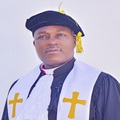
Chairman
The Rt. Rev. Dr. Lt. Col. Bliss Divine Kofi Agbeko(rtd) is an Ordained Minister of Religion, and the Moderator of the General Assembly of the Evangelical Presbyterian Church, headquartered in Ghana(EPCG). Full Story

Our Currrent Programs
Socio-economic Justice issues are one of the priority areas of the Council. The Council works at promoting livelihoods Full Story
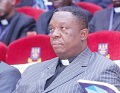
General Secretary
Rev. Dr. Cyril G. K. Fayose, a senior clergy person of the Evangelical Presbyterian (E.P) Church Ghana, has been appointed by the Christian Council of Ghana as the new General Secretary on this day, Wednesday, April 25, Full Story

Governance
This programme builds the capacity of Member Churches and the Local Councils of Churches in good governance and social accountability so that the target beneficiaries could participate meaningfully in decision-making process that affects their lives, and engage constructively with policy makers and duty bearers to be accountable for their stewardship. Read All Latest News
Human Rights and Gender
The Council believes that the right of citizens, especially women, children and the disabled should be protected by all. In view of that, it works to ensure that there is respect for fundamental human right which includes the right to live, the right to education, the right to free speech and the right to movement with the view of ensuring peace. Council’s work in the area of HIV/AIDS, advocacy for Food Security and Worse forms of Child trafficking reflect the right based approach to its activities.
Interfaith and Ecumenism
The Council connects with other Christian bodies such as the Ghana Pentecostal Council (GPC), National Association of Charismatic and Christian Churches (NACCC) and the Council of Independent Churches (CIC) to foster peace and advance social issues and Christianity. It also works closely with other religious organizations such as the Office of the Chief Imam, Ahmadiyya Muslim Mission, Federation Read All Latest News