|
For Immediate Release: Christian Council of Ghana Calls For Sound and Responsible Prophecies
Tuesday February 24, 2026
Christian Council of Ghana
For Immediate Release
Christian Council of Ghana Calls For Sound And Responsible Prophecies The Christian Council of Ghana (CCG) is calling for a more sanitised and responsible religious environment in 2026 and beyond. The recent national primaries of the New Patriotic Party (NPP) to elect its flagbearer witnessed numerous prophecies from various individuals concerning the outcome of the election. At the conclusion of the polls on Saturday, January 31, 2026, former Vice President and NPP flagbearer, Dr. Mahamudu Bawumia, was re-elected. While some prophets predicted the outcome accurately, others did not. This development has become a source of concern to the CCG. The Council raises a critical theological question: How can the same God reveal different outcomes of the same event to different prophets? If the nature, manner, and outcomes of political prophecies in Ghana are not carefully examined, they risk creating the erroneous impression that the God proclaimed by these prophets is inconsistent. In extreme cases, conflicting prophecies may portray God as confused or indecisive—one who declares a matter and then reverses course. This raises further questions: Is God concerned only with the outcomes of elections in Ghana? Is He not equally concerned about how the nation is governed, about socio-economic justice, and about the collective wellbeing of His people? Is God indifferent when citizens suffer in hospitals due to the “no bed syndrome,” leading to preventable loss of life among the nation’s workforce? The CCG fully acknowledges the fundamental freedom of religion and belief guaranteed under the 1992 Constitution of Ghana. Article 21(1)(b) guarantees the right to freedom of thought, conscience, and belief. Article 21(1)(c) further guarantees the freedom to practise and manifest one’s religion, including the freedom to worship, teach, observe rituals, and express religious convictions publicly or privately. Citizens— whether prophets, pastors, or lay members—also enjoy the rights to assemble and to associate, including the formation and participation in religious groups and institutions. However, while the CCG affirms that every citizen, including prophets, has the right to practise and manifest their religion, these freedoms must be exercised responsibly. Religious liberty must be balanced with civic responsibility to ensure that the exercise of faith does not generate fear, panic, or social unrest. Ghanaian law does not permit the use of religion as a vehicle for fear-mongering or incitement. Religious freedoms are subject to limitations necessary for public safety, public order, and the protection of the rights of others. Section 208 of the Criminal Offences Act, 1960 (Act 29) criminalises the publication of false statements, rumours, or reports likely to cause fear and alarm or disturb public peace. Offenders may face fines or imprisonment for up to five years. Similarly, the Electronic Communications Act, 2008 (Act 775) prohibits the use of electronic communication to transmit false or misleading information that may cause fear or panic. Accordingly, prophets and religious leaders who use pulpits, media platforms, or social media to disseminate false or misleading messages may be liable to prosecution where such communications result in public alarm. The Christian Council of Ghana does not exercise oversight over all prophets in the country. Indeed, not all prophets are affiliated with ecumenical bodies such as the Ghana Pentecostal and Charismatic Council (GPCC) or the National Association of Charismatic and Christian Churches (NACCC), making coordinated regulation challenging. Nevertheless, it must be clearly stated that any prophecy that proves palpably false, misleading, and capable of generating fear or panic exposes its author to potential legal consequences. The CCG therefore calls for decorum, responsibility, and theological integrity in the practice and manifestation of religion in Ghana. Let us promote sound doctrine that fosters peace, tolerance, ethical values, and patriotism. Let our pulpits champion environmental stewardship, cleanliness, and ecological justice. Prophets and religious leaders owe a duty—to God, to the nation, and to their own consciences—to help build a strong society anchored in moral and ethical values. Prophetic voices must boldly confront corruption, nepotism, intolerance, poor governance, and other societal ills. Scripture itself provides guidance: “Do not treat prophecies with contempt but test them all; hold on to what is good” (1 Thessalonians 5:20–21). Authentic prophecy must withstand scriptural scrutiny, promote the common good, and denounce wrongdoing. As Christians observe the season of Lent and our Muslim brothers and sisters also observe Ramadan, this sacred period should inspire personal and collective reflection on how best to advance socio-economic justice and national prosperity. Such reflection will better serve the national interest than the misuse of pulpits and electronic platforms to circulate false or misleading messages that add no value to society. Signed Rev. Dr. Cyril G. K. Fayose General Secretary, Christian Council of Ghana Download Official Statement Here Source: CCG |
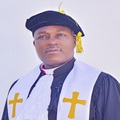
Chairman
The Rt. Rev. Dr. Lt. Col. Bliss Divine Kofi Agbeko(rtd) is an Ordained Minister of Religion, and the Moderator of the General Assembly of the Evangelical Presbyterian Church, headquartered in Ghana(EPCG). Full Story
Our Currrent Programs
Socio-economic Justice issues are one of the priority areas of the Council. The Council works at promoting livelihoods Full Story
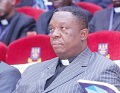
General Secretary
Rev. Dr. Cyril G. K. Fayose, a senior clergy person of the Evangelical Presbyterian (E.P) Church Ghana, has been appointed by the Christian Council of Ghana as the new General Secretary on this day, Wednesday, April 25, Full Story

Governance
This programme builds the capacity of Member Churches and the Local Councils of Churches in good governance and social accountability so that the target beneficiaries could participate meaningfully in decision-making process that affects their lives, and engage constructively with policy makers and duty bearers to be accountable for their stewardship. Read All Latest News
Human Rights and Gender
The Council believes that the right of citizens, especially women, children and the disabled should be protected by all. In view of that, it works to ensure that there is respect for fundamental human right which includes the right to live, the right to education, the right to free speech and the right to movement with the view of ensuring peace. Council’s work in the area of HIV/AIDS, advocacy for Food Security and Worse forms of Child trafficking reflect the right based approach to its activities.
Interfaith and Ecumenism
The Council connects with other Christian bodies such as the Ghana Pentecostal Council (GPC), National Association of Charismatic and Christian Churches (NACCC) and the Council of Independent Churches (CIC) to foster peace and advance social issues and Christianity. It also works closely with other religious organizations such as the Office of the Chief Imam, Ahmadiyya Muslim Mission, Federation Read All Latest News